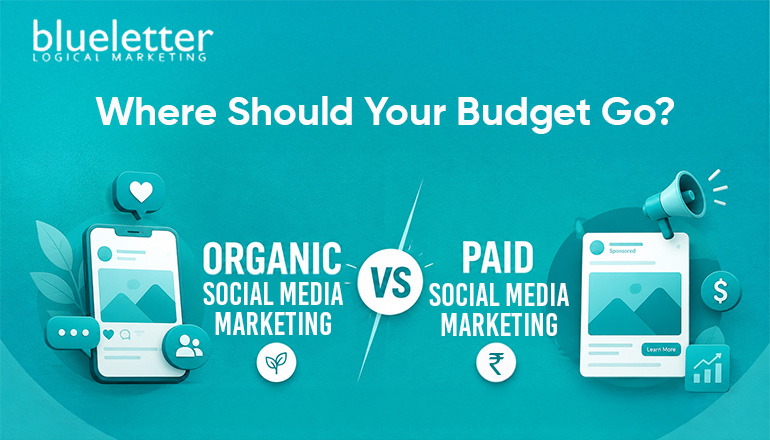
Organic vs Paid Social Media Marketing: Everyone tries to achieve visibility via social media platforms. However, the challenge here is figuring out how to achieve that goal. Do you opt for spending time producing content that will grow organically or would you prefer to pay for campaigns to see fast results? In reality, it’s not that easy to make one choice or another because both strategies have their own roles to play. It is important to understand them to make your budget work better.
Organic vs Paid Social Media Marketing
Social media marketing has evolved into two distinct approaches: organic social media marketing, which relies on unpaid content, engagement, and community building, and paid social media marketing, which uses sponsored posts and targeted ad campaigns to reach a wider audience faster. Choosing between the two can be confusing, especially for small businesses working with limited budgets. In this article, we will compare organic and paid social media marketing across reach, cost, targeting, and long-term value to help you find the right path to your business success.
Start With Your Marketing Objective
Before figuring out where your budget will be allocated, determine what success means.
- Are you aiming for brand recognition?
- Are you looking for lead generation?
- Boosting website visits?
- Limited time offer promotion?
Goals determine strategy.
If you don’t have any goals, you risk wasting both time and money on marketing activities that won’t yield much value. With well-defined goals, it is easy to choose the most appropriate strategy.
What Organic Social Media Brings to Your Business
The organic social media refers to the content that you post without any paid advertising. It involves education articles, videos, customer testimonials, behind-the-scenes information, and other forms of community interaction.
The greatest benefit of organic social media is relationship building.
Posting valuable content will help people become familiar with your brand and your area of expertise. As opposed to paid campaigns, which end as soon as your budget ends, the organic content will keep generating engagement and build up your online presence.
This is because companies usually find themselves weighing organic social media vs paid advertising when they need to scale their operations.
When Paid Social Media Makes Sense
With paid campaigns, you can target a certain demographic far more quickly than just relying on organic content. In place of waiting for your content to acquire visibility, you can simply promote it directly to those who fit certain demographics, interests, or geographic location.
The strategy works especially well when you launch a product or run seasonal offers, gather leads, or increase registrations at an event.
Knowledge about when to use paid social media marketing ensures that organizations do not waste their funds since paid marketing works best if an organization has goals, targets, and an offering.
Ads without those things usually bring poor results.
Checkout: Best Social Media Marketing Company in Dehradun
Should You Choose One Strategy Over the Other?
Many businessmen wonder, “Should I use organic or paid social media”?
In reality, curing them in such a way is not the right path most of the time. The organic content will help you build trust and engage the target audience even during non-campaign periods.
The paid marketing increases the coverage and helps to meet the business objectives sooner. While one takes more time, the other is all about speed.
Effective social media strategies know the importance of both.
Finding the Right Balance
Instead of allocating your budget completely to one strategy, think about how they can complement each other.
Learning how to balance organic and paid social media begins with generating quality content regularly. After you have found the posts which are working organically for you, make use of paid social ads to get in front of a larger audience.
There are two benefits to this approach.
- First of all, you are investing in content which has proven itself.
- Second of all, your campaigns seem to be much more authentic since they are based on the content that your audience loves.
In this way, you create not two different strategies but one connected marketing strategy.
What Works Best for Small Businesses?
The budget is usually the primary problem that small companies face.
Therefore, any debates on organic vs paid social media for small business must emphasize the priorities rather than taking sides.
If you’re just starting, allocate some time to build up your consistency through organic means. Post valuable content, interact with your audience, and create your voice.
As your business grows, consider using paid campaigns strategically in order to announce something new, gain leads, or to reach new audiences. In this way, your business can effectively use the limited marketing budget while building its brand equity.
Make Your Budget Work Smarter
Being successful on social media does not depend on how much money you invest.
What counts is how your investment helps you reach your business goals.
Posting each day without a strategy will not result in growth.
In the same way, running paid campaigns without quality content will likely give temporary results.
Most successful companies consider organic content as the foundation, while paid promotion is used to amplify their best-performing content.
This helps them achieve more visibility, engagement, and sustainable growth..
Final Thoughts
Since every company is unique, there is no single solution regarding what to invest your budget in.
Don’t think about whether to choose one strategy over another but instead consider how both will help you achieve your goal by helping you build long-term relations and finding new customers at the crucial moments of your business’s development.
The more informed you are about what needs to be done, the more confident your marketing decisions will be.
In case you need some additional information on creating your digital footprint, we advise you to start following BlueLetter India on Instagram as they provide tons of helpful tips on social media marketing, branding, websites, and business development.
Frequently Asked Questions
Here are 3 FAQs for the article — written to be GEO/citability-friendly (direct answer in the first sentence, works with FAQPage schema):
Q1. Which is better for a small business: organic or paid social media?
For most small businesses, organic social media is the better starting point. It builds brand trust, consistency, and audience relationships without ad spend. Once your business grows and you have clear goals — like launching a product or generating leads — paid campaigns can be added strategically to reach new audiences faster.
Q2. How do I balance organic and paid social media in one strategy?
Start by posting quality organic content consistently, then identify which posts perform best. Use paid promotion to amplify those proven posts to a larger, targeted audience. This way, your ad budget goes only into content your audience has already validated, making campaigns more authentic and cost-effective.
Q3. When should I use paid social media marketing?
Paid social media works best when you have a specific, time-bound objective — such as a product launch, seasonal offer, event registration, or lead generation campaign. Running paid ads without a clear goal, defined audience, and strong offer usually leads to wasted budget and poor results.